Grape in the spotlight

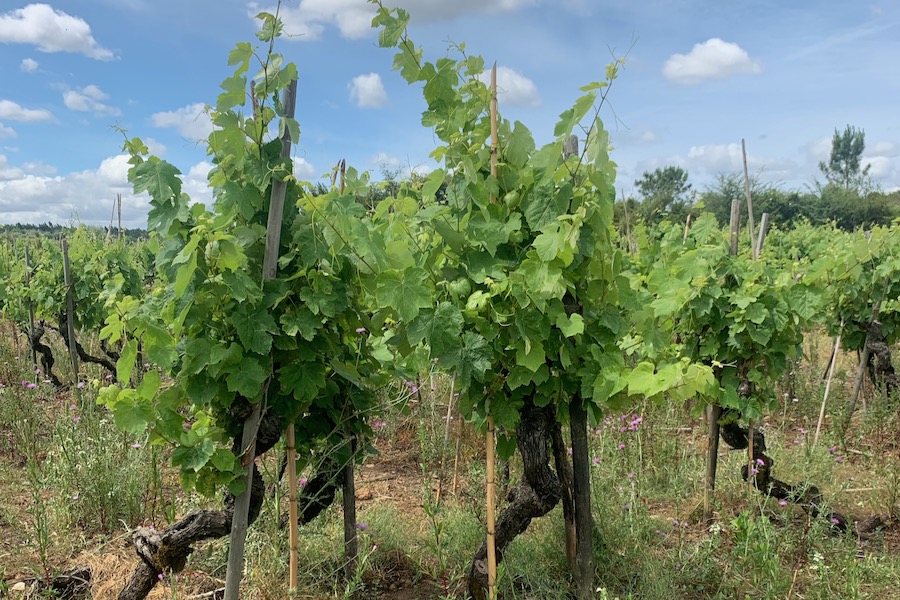

Baga, the wonder grape
In the small Bairrada wine region, an hour's drive south of Porto, grows the Baga grape. It is a remarkable grape, and a difficult one. It is not easy to grow, but in skilled hands it makes wonderful wine, full of character and often with almost endless ageing potential.

Because of its high yields, planting Baga was strongly encouraged at the start of the last century. As a result the grape was often planted on sandy soils, where it mostly produces very hard wine. Baga earned a reputation for harsh, difficult wines and its popularity dropped sharply.
Fortunately a handful of winemakers, led by Luis Pato (Filipa's father), turned this around from the 1980s onwards. They brought a boost in quality that gradually created a new audience for Baga wines.
Baga and terroir
The key to success was restricting the grape to the right soils. In Bairrada at least, Baga needs a specific mix of clay and limestone.
That is not the only soil that suits the grape. Baga is sometimes found in the Douro and the Dão too, but there it seems happiest on granite. Soil, then, is not the only deciding factor.
The French use the term 'terroir' for the environmental conditions in which grapes are grown, notably soil and climate. We cannot talk about grape varieties without linking them to their terroir. The same variety can behave completely differently depending on where it is planted, and that leads to differences in the end product: the wine.
For Baga in Bairrada, terroir seems to be a combination of a climate strongly influenced by the nearby ocean and a soil mixing clay and limestone.
The many faces of Baga
Terroir alone is no guarantee of success. Every summer is different: warm and cooler summers, wet and dry ones. How warm and how dry the season has been largely determines the state of the Baga at harvest. The winemaker's art lies in reading that well.
Traditionally, winemakers aim for a Baga with lots of concentration, and so plenty of acidity and tannin. That style needs time in bottle: classically made Baga is only at its best after ten years or so in the cellar. But you cannot make that kind of age-worthy wine in every vintage. Sometimes there is not enough concentration or ripeness, and forcing the classic style then often gives a hard wine.
In the past, nobody knew what to do with those less ripe harvests. Today a new generation makes excellent wine from them by choosing the gentlest possible extraction. The result is a light red that charms not with intensity but with freshness and easy drinkability: glou-glou Baga, if you like. It is no coincidence that this new generation likes to work with terracotta amphorae, which favour gentle extraction.
Baga and you
Want to discover that lighter style of Baga in our range? Then be sure to try Drink Me by Niepoort or Dinamica by Filipa Pato. The Vacariça Baga Anfora is another good example, albeit with a little more structure.
Prefer old-school Baga, or want to build a cellar for the future? Then the Reservas from Quinta das Bageiras are an excellent investment. The Nossa Calcário tinto by Filipa Pato and William Wouters is a must-have too.