WINE REGIONS
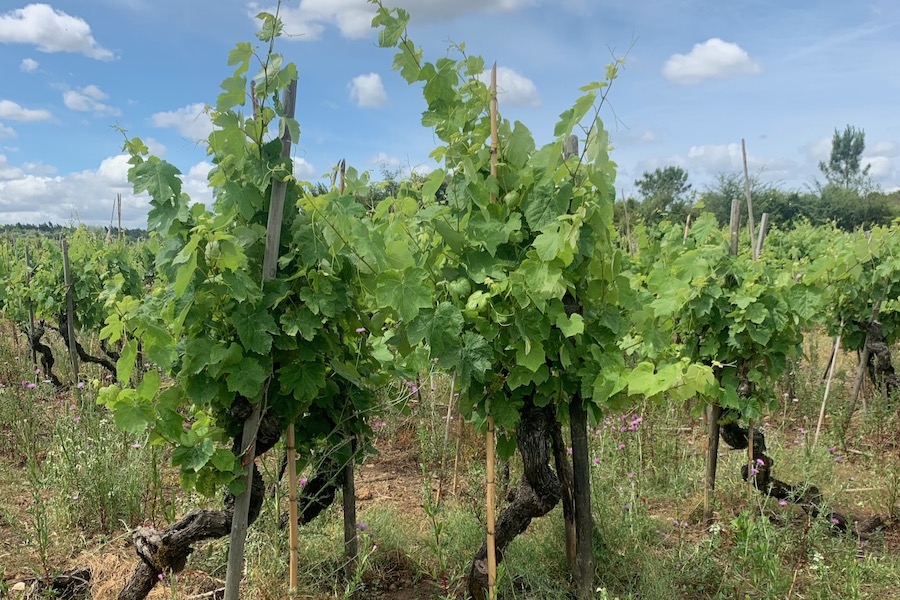
Bairrada
Just north of the university city of Coimbra lies the small wine region of Bairrada. The region enjoys the direct cooling influence of the ocean and makes full-bodied yet refined white wines with the Bical grape. Its red wines, based on the characterful Baga, come in numerous guises and are among the most interesting in Portugal.
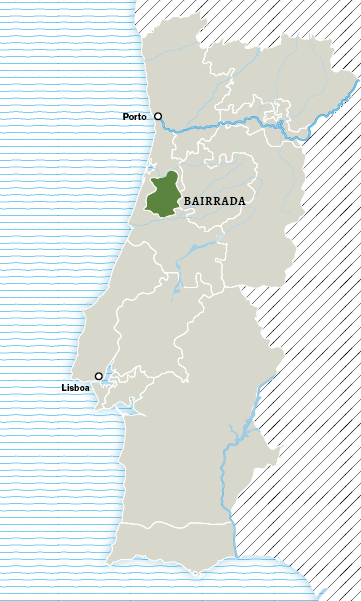
Bairrada is part of the vast Beiras region and, together with the Dão, is its most important DOC. From the northernmost vineyards in Agueda to the southernmost plots in Souselas, it is barely 30km from a birds' eye view.
The History
Wine was produced in Bairrada as early as the 10th century, after the expulsion of the Moors. In the early 18th century, the region's powerful, dark-coloured wine was used to blend with Porto. Unfortunately, this became fatal to the region. When the Marques of Pombal imposed strict rules on the production of port in 1756, he ordered the grubbing up of all vines in Bairrada.
It was not until the end of the 19th century that more vineyards were created, mostly for sparkling wine production. It would take until the end of the 20th century for red wines to be revived. The socialist regime that ruled Portugal for a long time mainly encouraged trade through cooperatives. The many small vineyard owners in the very fragmented Bairrada (barely 13,000ha of vineyard is divided among more than 2,000 owners) were eager to hear this. Thus, production was dominated by a handful of companies for a long time, which is usually not conducive to quality.
Maar net die situatie heeft jonge ondernemende wijnmakers zoals Filipa Pato toegelaten om druiven van oude wijngaarden te
bemachtigen en zo hun eigen project te starten, zonder meteen eigenaar te zijn van de wijngaarden. Ze bieden een prijs per kilo druiven die hoger ligt dan wat de coöperatieven betalen, maar verbinden daar de voorwaarde aan dat de wijngaarden volgens hun principes behandeld worden.
The Bairrada seems likely to remain a niche region forever. The fragmentation makes it impossible to set up large projects that can be marketed with equally large budgets. However, the small producers who have recently united under the name 'Baga Friends' are proving that many small-scale projects together can also form a whole.
The basis for quality is all the best. The Atlantic Ocean is barely 20km away. The vineyards are located in the hills just before the Serra do Caramulo (1075m high) and the Serra do Buçaco (547m). The cool Atlantic air strongly determines the climate. The average temperature in July and August stays below 22°C. In September, the average drops by one degree. The hottest years do see peaks of up to 40°C, but this is rather exceptional. Important for viticulture are the large differences between day and night.
Zand en combinaties van klei en kalk wisselen mekaar af in de bodem. De belangrijkste blauwe druif, Baga, geeft de beste resultaten op de zwaardere klei-kalkbodems.
Het is een druif met een dunne schil die gevoelig is voor rot in het vochtige
but when optimally ripened it gives great wines. It used to account for 90% of plantings in the region. Today it is down to 40%, which is a positive evolution because too much Baga was planted on inferior soils and unfairly gave the grape a bad reputation.
Baga wordt gekenmerkt door flinke zuren en tannines. Ze doet zo erg denken aan rassen als Pinot Noir en zeker ook Nebbiolo. Je kunt er daardoor 2 kanten mee uit en beide weten wijnliefhebbers te bekoren.
By opting for light squeezing of the grapes and gentle extraction of the juice, you can make lighter red wines that charm with low alcohol and plenty of freshness. Increasingly, winemakers in Bairrada are reverting to ancient, terracotta amphorae for this purpose, which lend themselves perfectly to making such wines.
De andere weg is die van de royale extractie van alle smaakcomponenten uit de schillen. Dat vereist, meer dan de eerste methode, een goed oogstjaar omdat onrijpe tannines weinig plezier brengen. Is die oogst goed dan kan je met Baga zeer gestructureerde wijnen produceren boordevol potentieel.
Die vragen dan wel om een lange, geduldige flesrijping maar wie dat er voor over heeft, krijgt uitendelijk
zeer karaktervolle, complexe wijn in zijn glas. Een oude, gerijpte Baga deelt zo de grootsheid van zijn reeds genoemde, illustere collega’s uit Bourgogne en Piemonte.
Other permitted blue varieties include Alfrocheiro, Bastardo, Castelão, Jaen, Touriga Nacional, Cabernet Sauvignon, Syrah and Merlot.
For white wine, we see Arinto, Bical, Cercial, Cercialinho, Fernão Pires, Rabo de Ovelha and Chardonnay.
Non-native grape varieties were added to the appellation in 2003. Question is whether this adds much value.
Terwijl de kwaliteit van de witte en rode wijnen exponentieel gestegen is blijft espumante, gemaakt volgens de méthode traditionnelle, ook een belangrijke plaats en worden er net zo goed hoogstaande mousserende wijnen gemaakt.
Oppervlakte: 9.800ha (in 2024)
Totale jaarlijkse productie: 175.000 hl
Ter vergelijking
Bourgogne: 27.188ha voor 1.400.000hl / Bordeaux: 120.000ha voor 6.000.000hl
Jouw Dynamic Snippet wordt hier weergegeven ... Dit bericht wordt weergegeven omdat je niet zowel een filter als een sjabloon hebt opgegeven om te gebruiken.