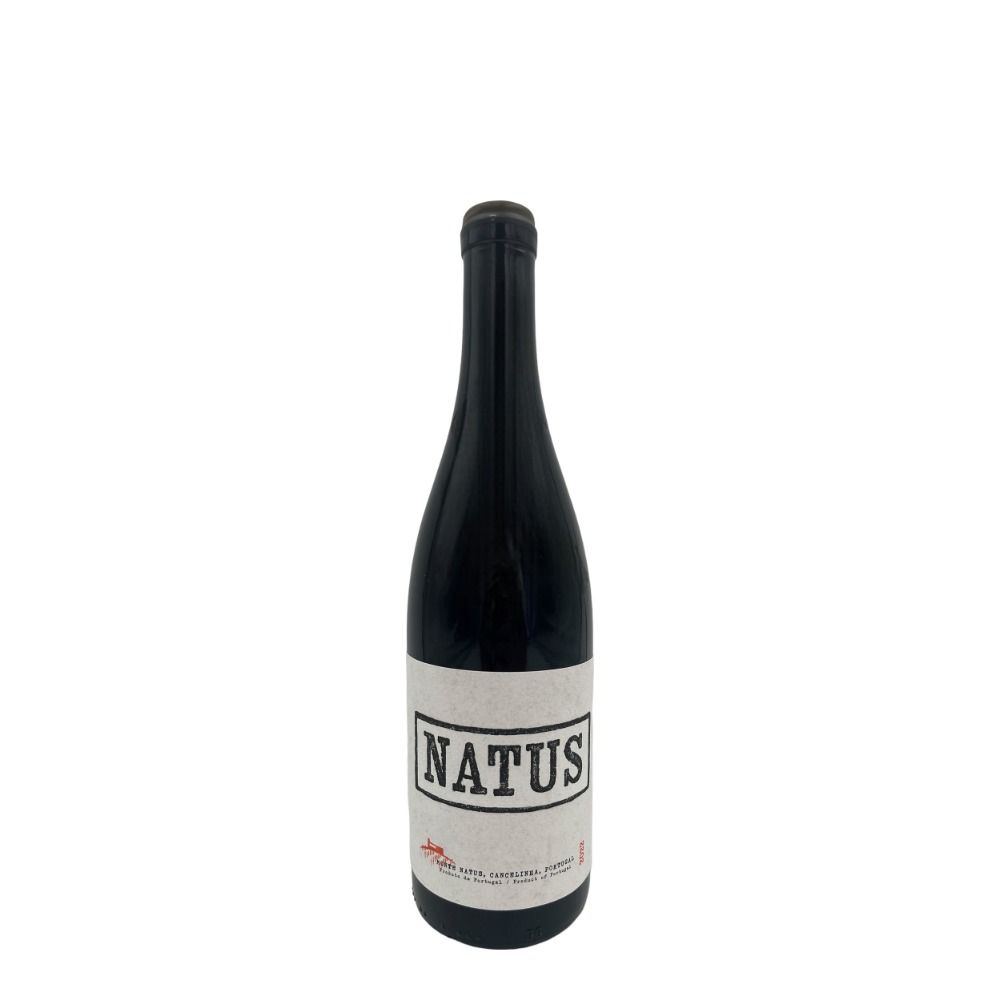
Natus Tinto 2022
Region: Alentejo
Producer: Natus Vini
Why we chose this wine
At the heart of Vidigueira, in the southern foothills of Serra do Mendro, in poor schist soils, the vines are planted in a hot climate, buffered with cool nights.
Open cherry red, the color has crystalline halo. The aromas of wild berries and forest floor in harmony with vegetable notes, translate into reactive acidity, with a creamy and elegant texture in the palate. Freshness and delicacy are its character and identity, never tiring, unfolding several layers of flavors, challenging the senses and delivering at the table.
Open cherry red, the color has crystalline halo. The aromas of wild berries and forest floor in harmony with vegetable notes, translate into reactive acidity, with a creamy and elegant texture in the palate. Freshness and delicacy are its character and identity, never tiring, unfolding several layers of flavors, challenging the senses and delivering at the table.
| Volume | 75.0 cl. |
| Grape Variety | Trincadeira & Castelão |
| Drinking window | 2024-2030 |
| Alc. | 13.0% |
| Vinification | The traditional grape varieties, mainly Trincadeira & Castelão, were hand-picked and foot trodden.<br />At the spontaneous start of fermentation, the grapes were pressed and the must kept in 19th century clay pots (Talhas) until the end of the alcoholic fermentation. |
| Ripening | The 12-month aging was made in centenary 600L barrels made of Portuguese oak and chestnut, and 300L used French barrels. |
Waar serveer je ’m bij?
Trincadeira and Castelão, hand-picked and foot-trodden, spontaneously fermented. The ageing is the remarkable part: twelve months in hundred-year-old six-hundred-litre casks of Portuguese oak and chestnut, alongside used French three-hundred-litre barrels. Old wood in large format gives no flavour but plenty of texture. Schist soils in Vidigueira, hot days and cool nights.
Drie gerechten die werken
Roast shoulder of lamb with garlic
Beef brochette with grilled onion
Aubergine stuffed with minced meat and cinnamon
Beef brochette with grilled onion
Aubergine stuffed with minced meat and cinnamon
Vegetarisch
White beans stewed with tomato and cumin
Minder geschikt bij
Raw fish and shellfish.
Voor de Portugees geïnspireerde kok
Porco preto com migas de espargos — black pork with worked bread and wild asparagus
Serveren op 15–16 °C
What the critics say
JancisRobinson.com
17,5/ 20
Tasted 11-05-2026
Drink: 2026–2032
Drink: 2026–2032
Mainly Trincadeira and Castelão from old vineyards. Whole bunches are foot-trodden, fermented in talha and aged in old barrels. Certified organic.
Light cherry red. Intense and inviting aroma of sweet-sour cherry. Just a hint of stems adding to the fresh impression. Chewy but super-fine tannins. Mouth-watering and utterly refreshing and the freshness is completely integrated with the vibrant fruit and finely tannic texture. Beautifully balanced, elegant and long.
— Julia Harding MW, JancisRobinson.com
The producer
Natus Vini
Hamilton Reis planted his own vineyard by hand in 2008 in Vidigueira, deep in the Alentejo, and farms it fully organically. He ferments in the region's traditional amphorae, but without the skins, then ages the wine in large wooden casks.