Grape in the spotlight
Touriga Nacional: Portugal's best-known red grape
Touriga Nacional is the grape you meet most often when talking about top Portuguese wine. It is the backbone of the finest ports, and increasingly of dry red wine too, with a deep colour, firm tannins and a scent of violets.
Touriga Nacional at a glance
| Origin | Probably the Dão |
|---|---|
| Main regions | Douro and Dão; by now in almost every Portuguese wine region |
| Plantings | 11,528 ha (2025), the third most planted grape in Portugal, after Aragonez and Touriga Franca |
| In the vineyard | Small bunches of small berries, low and irregular yields |
| Colour and taste | Deep in colour; floral when young (violets) with dark fruit and firm tannins |
| Role | Basis of port; dry, on its own or in a blend |
| Family | Parent of Touriga Franca, the most planted grape in the Douro |
Read more about the other Portuguese grapes in our overview of Portuguese grape varieties.
Almost extinct, then a national pride
Whoever plants Touriga Nacional does not choose the easy way. The vine grows vigorously but sets fruit poorly: flowering often fails, the bunches stay small and each vine sometimes yields barely a few hundred grams of grapes. For a grower paid by the kilo, that was not good business. By the middle of the last century the grape had almost disappeared.
Its comeback is owed to clonal selection: growers picked out the plants that bore slightly more and more regularly, without sacrificing quality. Newer plantings therefore yield a little more and even reach higher sugar levels. Since then Touriga Nacional has become one of the most planted grapes in the country, and has spread from the north to almost every wine region in the south.
Dão or Douro: one grape, two characters
In the Dão, where the grape comes from, it grows on granite and at altitude. Nights are cool and ripening is slow, which gives the wines freshness and finesse. Even there, Touriga Nacional is rarely bottled on its own: winemakers such as Alvaro Castro and António Madeira prefer a blend with Alfrocheiro, Jaen or Tinta Roriz, or work with old, mixed vineyards.
In the Douro, Touriga Nacional is now more important than in its home region. On the warm schist slopes it delivers more power and concentration, and together with Touriga Franca it forms the core of both port and dry red Douro. Touriga Franca is in fact an offspring of Touriga Nacional, but a very different grape: more productive, less concentrated and with a perfume of its own.
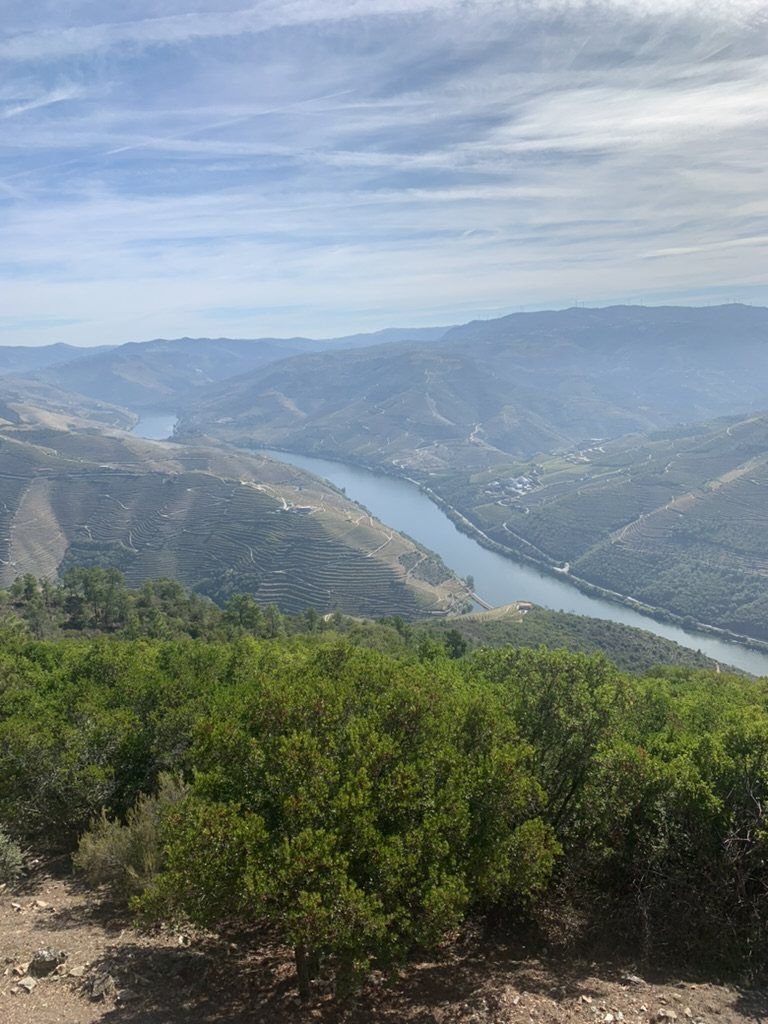
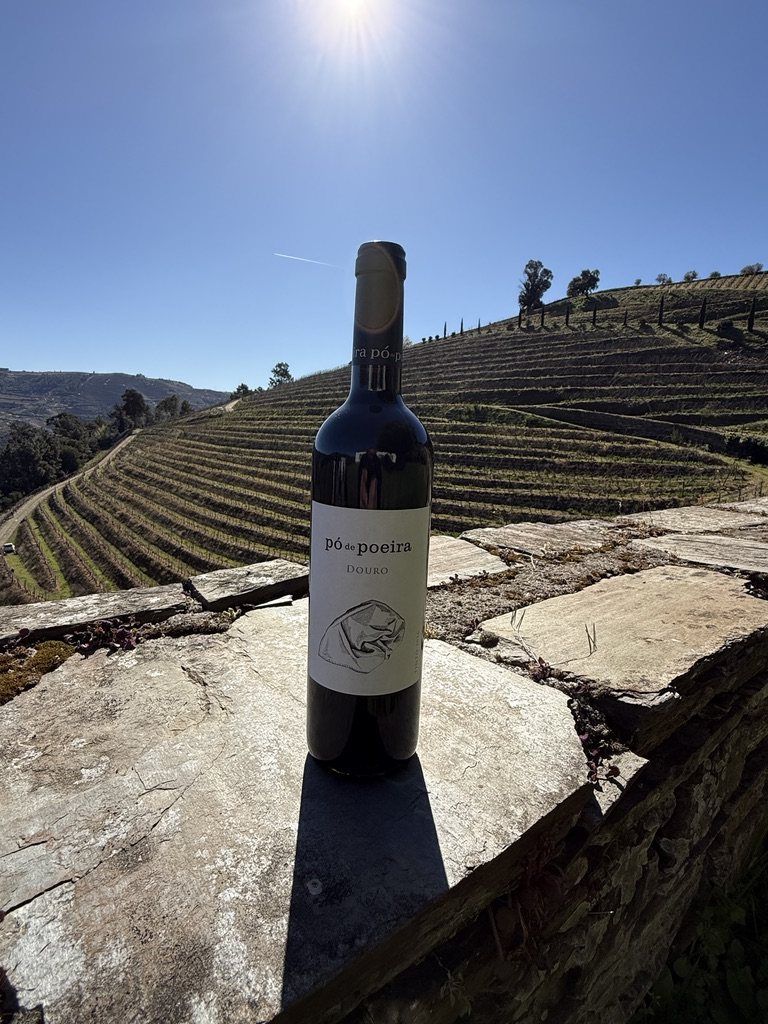
The Douro: steep schist slopes above the river.
What does Touriga Nacional taste like?
You recognise young Touriga Nacional by its nose: violets and other flowers, with dark fruit such as blackberry and blackcurrant underneath. On the palate the wine is deep in colour and firm in tannin. In the classic style, with long maceration and plenty of extraction, it calls for meat on the table.
A new generation of winemakers deliberately opts for gentle extraction. Then you get the same floral grape in a light, juicy version, such as the Primata from Niepoort.
Why we prefer to drink Touriga Nacional in a blend
We are convinced that Touriga Nacional is at its best in company rather than on its own. One hundred per cent Touriga is often too much of a good thing: so much colour, flowers and tannin needs a counterpart. We are not alone in this; according to the Oxford Companion to Wine, many consider the grape better in a blend.
It is also the Portuguese tradition. Old vineyards there are often field blends: dozens of varieties planted side by side and harvested together. That was sound peasant wisdom. One variety copes better with rain, another with drought or a particular disease, so whatever the weather does, there is always a harvest. In the Douro that system was only rationalised away in the 1970s and 1980s, when new vineyards were planted variety by variety, with a handful of recommended grapes. Today more and more winemakers are returning to mixed plantings. Read more about it on our blog.
What to eat with Touriga Nacional?
Because of its tannins, Touriga Nacional is at its best with protein and fat. Think of grilled lamb chops, a rib of beef, game such as venison or wild boar, and stews that have simmered for hours. The more elegant Dão wines also go well with duck, guinea fowl or a mushroom dish.
Less suitable are delicate fish and shellfish, where the tannin tastes metallic, and spicy dishes, because heat amplifies the sensation of tannin and alcohol. Find more ideas on Which wine with which dish?
Touriga Nacional outside Portugal
Its success in Portugal did not go unnoticed. Touriga Nacional is now also planted in Australia, California and South Africa, where it is valued for coping well with heat. For the same reason Bordeaux admitted the grape in 2020, within strict limits, as one of the varieties meant to help cope with climate change.
Touriga Nacional in company: our blends
None of the wines below is one hundred per cent Touriga Nacional. Each bottle shows which grapes it is blended with and, where we know, in what proportion.
Dão: finesse and freshness
Douro: power and concentration
Other faces: palhete and port
Frequently asked questions about Touriga Nacional
Is Touriga Nacional the same as Touriga Franca?
No. Touriga Franca is an offspring of Touriga Nacional and Marufo, and the most planted grape in the Douro. It gives less concentrated but fragrant wine and crops more regularly than Touriga Nacional. Many Douro wines and ports contain both.
Is Touriga Nacional a heavy wine?
That depends on the region and the winemaker. From the Douro, in the classic style, it is powerful and tannic. From the Dão it is leaner and fresher, and some young winemakers even make light, juicy wine from it.
Should you age Touriga Nacional?
Most wines in our range are made to be drunk within a few years. Top wines such as Quinta do Vale Meão can keep for ten years or more. Where possible, the product page shows the drinking window.
Which port is made with Touriga Nacional?
Almost every port contains Touriga Nacional, usually blended with Touriga Franca, Tinta Roriz and other Douro grapes. It gives the wine colour, structure and floral aromas.
Plantings: IVV, castas mais utilizadas 2025 (ivv.gov.pt). Origin and background: The Oxford Companion to Wine, via JancisRobinson.com.