Anyone who knows my wines knows I have a soft spot for blends. Touriga Nacional, Portugal's best-known red grape, is one I prefer in company rather than on its own. That is not just a matter of taste. It has to do with how vineyards were planted for centuries, with why that disappeared in the twentieth century, and with why so many winemakers are going back to it today.
What is a field blend?
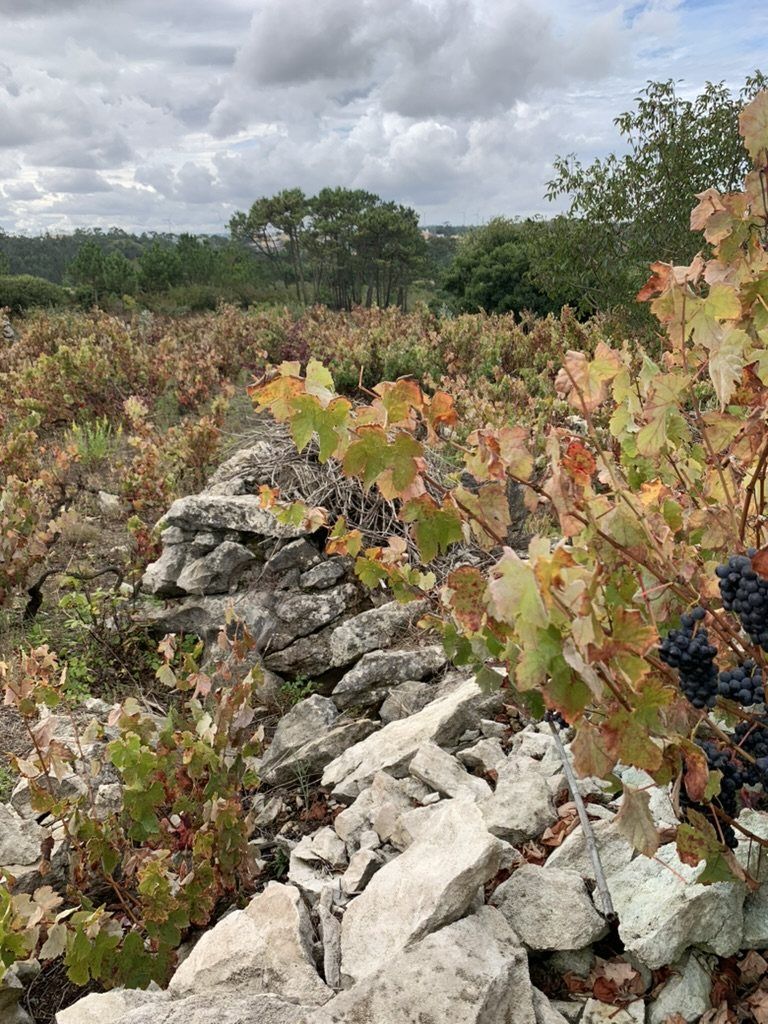
A field blend is a vineyard in which different grape varieties grow mixed together, and also the wine you make from it. The grapes are picked together and usually fermented together too. That is different from a cellar blend, where a winemaker mixes separately made wines afterwards.
Mixed planting like this was once the norm, and the logic is plain farming common sense. Weather and disease do not hit every variety in the same way. One copes better with a wet summer, another with drought; one is sensitive to a particular disease, another less so. If you plant everything together, you have a harvest every year. The varieties also complement each other: a grape with plenty of acidity next to one with little often gives a more balanced and complex wine together than either would alone.
You found vineyards like these all over Europe. In Austria and Germany they were called gemischter Satz, in France complantation. Today they are rare. The oldest survivors are mainly in Spain, Roussillon, California, South Africa and Portugal. I touched on the subject before in the third part of my series on Porto and the Douro.
How the mixed vineyard disappeared
Phylloxera, the vine louse, is often named as the turning point. In the late nineteenth century it destroyed almost all of Europe's vineyards, and everything had to be replanted on American rootstocks. But in the Douro, at least, the old terraces were largely replanted after phylloxera in the same mixed pattern. The real break came later.
In the 1970s, viticultural studies concluded that a handful of varieties were superior. When the Douro restructured some 3,700 hectares of abandoned vineyard in the early 1980s, through a large development programme backed in part by the World Bank, five varieties were even made compulsory for new plantings: Touriga Nacional, Tinta Roriz, Touriga Franca, Tinta Barroca and Tinto Cão. One variety per plot. That was easier to work, to mechanise and to vinify. Mixed vineyards were seen as outdated.
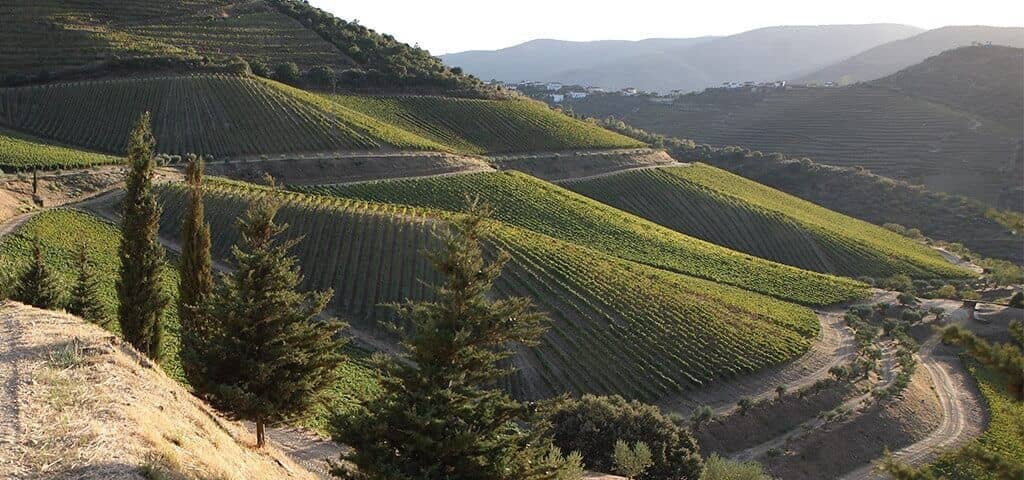
Elsewhere in the wine world things went the same way. Rationalisation and mechanisation pushed vineyards everywhere towards monoculture.
From monoculture to chemicals
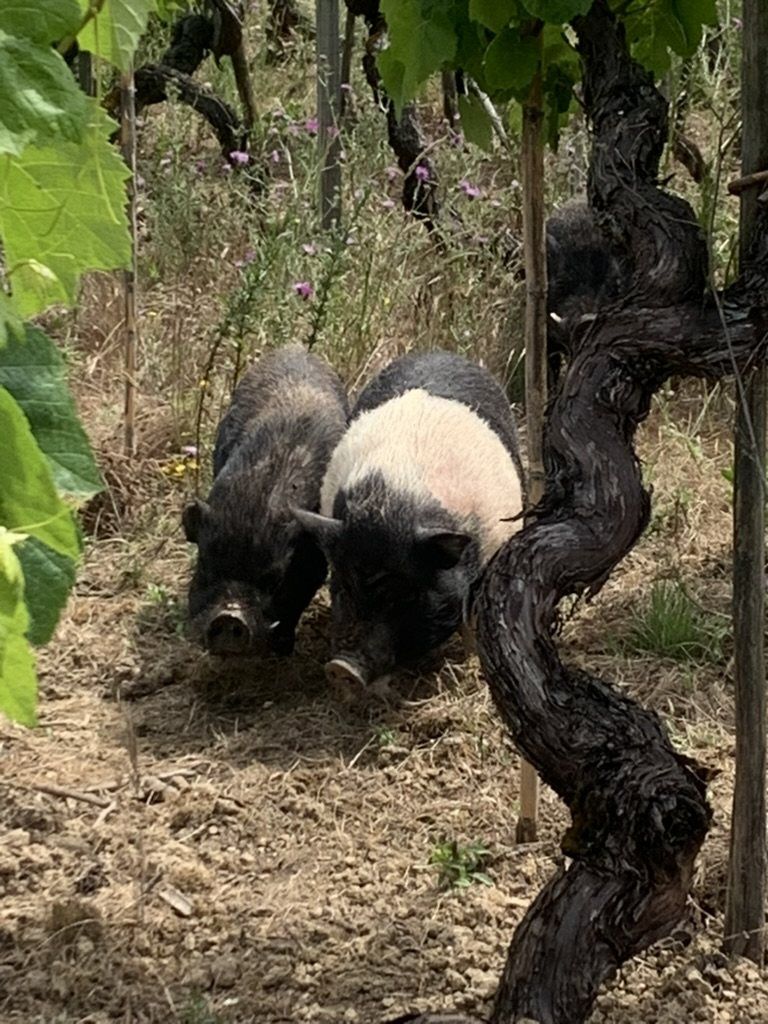
A vineyard with one variety, one clone and no animals is more vulnerable. What nature used to keep in balance now had to come from outside. After the Second World War, viticulture switched en masse to synthetic pesticides and fertilisers. With the mechanisation of the late twentieth century, cows, horses and sheep also almost completely disappeared from the vineyard.
The best-known warning came in 1988 from the French soil microbiologist Claude Bourguignon. According to him, there was less life in the vineyards of Burgundy than in the sand of the Sahara. His measurements showed clearly more microbial life in the soil of organically and biodynamically farmed plots than in conventional ones.
The counter-movement
The response came from several directions, and not neatly one after the other. Biodynamics is actually older than organic farming: it goes back to lectures Rudolf Steiner gave in 1924, although it only broke through in the wine world in the late 1980s. Steiner saw a farm as a self-contained organism, with animals, crops and a living soil. Diversity is a natural part of that. Meanwhile, in the cellar, natural wine emerged in Beaujolais as early as the late 1970s. How I got to know it myself, at Marcel Lapierre's, you can read in Three times Morgon: what Marcel Lapierre taught me about natural wine.
Back to the mixed vineyard
With that counter-movement, interest in the old field blends grew too, and more and more winemakers are rediscovering them. In the Douro, some are again planting small plots of mixed varieties and fermenting them together. Varieties that fell out of favour in the 1980s, such as Tinta Francisca, Bastardo or Sousão, are coming back because they bring freshness and lightness.
Climate change plays a part as well. In 2020, a study in the journal PNAS calculated that with two degrees of warming, the expected loss of suitable winegrowing area more than halves, from 56 to 24 per cent, if growers make use of the diversity of grape varieties. That study was about the choice of varieties per region, not about mixed plots, but the lesson is the same: diversity is insurance.
It is not a miracle cure. Varieties growing side by side do not ripen at the same time, and if you pick everything together, part of it will always be slightly overripe or not quite ripe enough. That is why some large Douro houses deliberately work with single-variety plots. With young field blends the problem is greater than with old vines and low yields.
The plant itself counts too
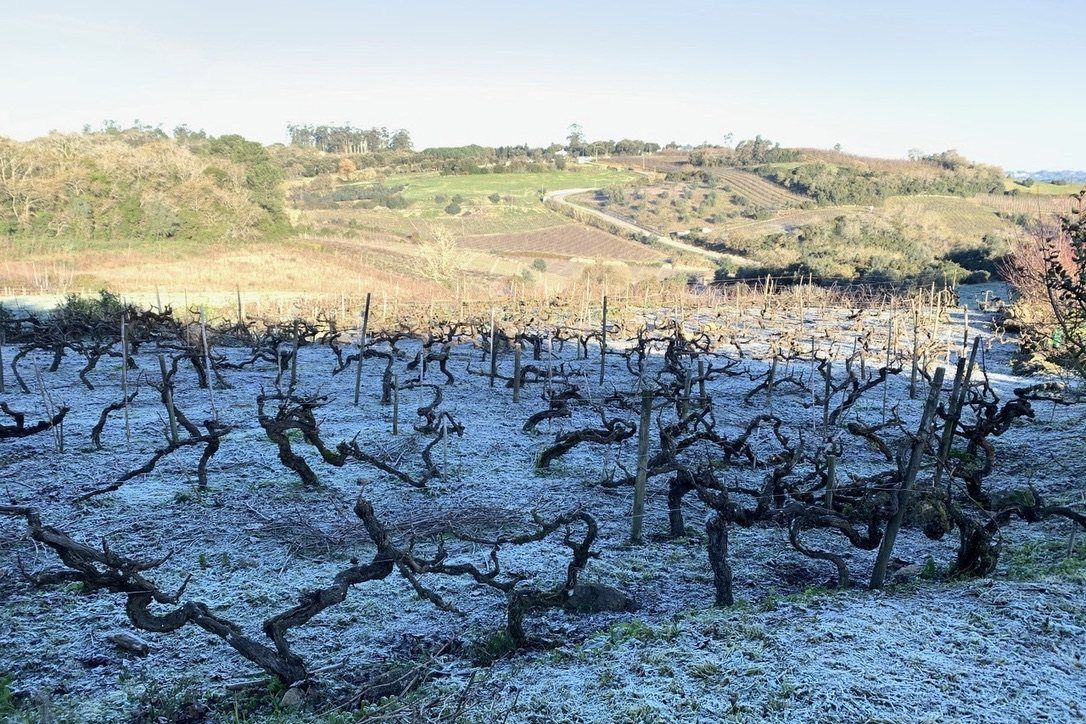
Old vineyards differ not only in their mix of varieties, but also in how the vines were planted. Until the 1980s, growers often planted the American rootstock in the vineyard first and later grafted the desired variety onto it in place. Today most vines come pre-grafted from the nursery. That is cheaper and quicker. But there are indications of more trunk disease in nursery-grafted plants, and infected mother plants in nurseries turn out to be an important source of infection in young vineyards.
Then there is selection. If you take new vines from a single selected clone, you get a vineyard of identical plants. If you take cuttings from many different vines in an old vineyard, the sélection massale, you preserve the genetic variation. That gives slightly less predictable yields, but according to the Oxford Companion to Wine often a more interesting wine. So standardisation is not only a matter of varieties, but also of clones.
Why Portugal has a head start
Portugal did not escape rationalisation either. Yet you still find many old mixed vineyards there today. In the Douro more than a hundred native varieties are recognised, and a dry red Douro may be made from as many as fifty of them. White Douro wines still largely come from old field blends.
In our range you can taste this, for example, in A Liberdade by António Madeira, who complements Touriga Nacional with a field blend, or in Cidade by Beiorte, from a mixed vineyard planted in 1960.
That is also why I prefer to drink Touriga Nacional in company. One hundred per cent Touriga is often too much of a good thing: that much colour, florality and tannin calls for a counterweight. You find that counterweight in the tradition of the mixed vineyard. Read more about Touriga Nacional.
Sources
- The Oxford Companion to Wine, via JancisRobinson.com: entries field blend, gemischter Satz, Douro, biodynamic viticulture, natural wine, field grafting, bench grafting, trunk diseases, mass selection.
- Morales-Castilla et al., 'Diversity buffers winegrowing regions from climate change losses', PNAS (2020).
- 'New Douro viticulture', The World of Fine Wine.