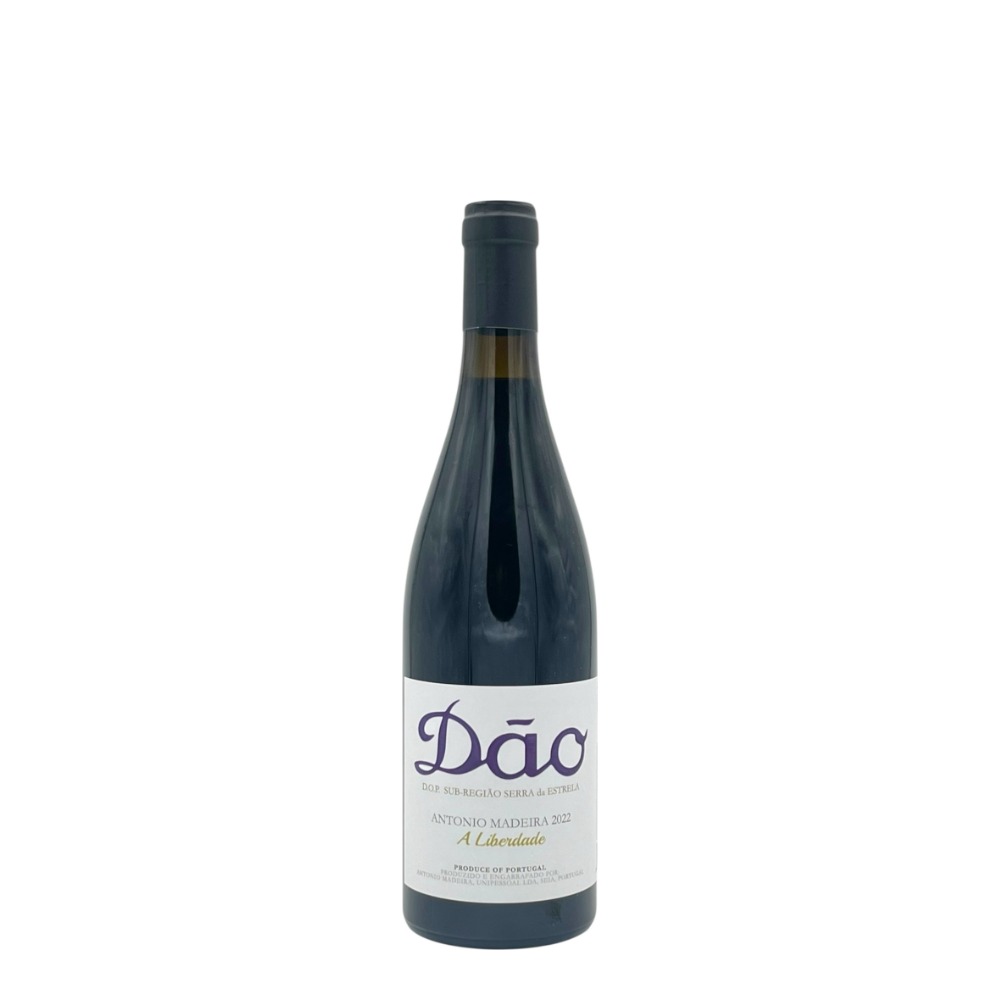
A Liberdade Tinto 2022, Antonio Madeira
Region: Dão
Producer: Antonio Madeira
Why we chose this wine
António Madeira is French by origin but his family roots are in the foothills of the Serra da Estrela, a sub-region of the Dão. It is in these highlands that we find the historic heart of the Dão, the region with the greatest potential for aging wines, where the wines are the finest, freshest and most mineral.
Since 2010, António Madeira has been searching in this sub-region for the sites that the ancestors chose as the best for vines, those that could be called "Grand Crus do Dão serrano".
He has found old vines that stand out for the authenticity of their grape varieties, the characteristics and nuances of their granite soils where they sink deep into their roots and exposure to the sun.
This wine was vinified without added sulphites, which means that the wild yeasts were free (in Portuguese "Liberdade" means freedom) .
The vineyard is between 50 and 70 years old.
| Volume | 75.0 cl. |
| Grape Variety | 80% Touriga Nacional & 20% field blend. |
| Drinking window | 2025-2028 |
| Alc. | 13.0% |
| Vinification | stainless steel |
| Ripening | - |
Waar serveer je ’m bij?
Liberdade means freedom, and here that refers to the yeasts: no added sulphites, the wild yeasts were given free rein. Eighty per cent Touriga Nacional gives the dark core and the firmest tannin of this Dão series; the field blend around it keeps the whole thing open. Entirely in steel, so what you taste comes from the grape and nowhere else.
Drie gerechten die werken
Grilled entrecôte
Lamb ribs with thyme
Lamb cutlet glazed with gochujang and sesame
Lamb ribs with thyme
Lamb cutlet glazed with gochujang and sesame
Vegetarisch
Grilled aubergine with pomegranate
Minder geschikt bij
Delicate preparations of fish or poultry. Do not open it too late either: without added sulphite it needs half an hour of air to get going.
Voor de Portugees geïnspireerde kok
Javali estufado — wild boar braised in red wine with juniper, from the Beira interior
Serveren op 16–17 °C
What the critics say
Robert Parker Wine Advocate
93/ 100
Published 04-04-2024
Drink: 2024–2029
Drink: 2024–2029
“The red blend 2022 A Liberdade was produced with 80% Touriga Nacional and 20% the field blend from a 50-year-old plot on sandy granite soils. The Touriga was planted 20 years ago, and Madeira said it took four years to domesticate the variety to achieve fine tannins. It fermented in lagar and matured in stainless steel for nine months. It has 13% alcohol, a pH of 3.61 and 5.67 grams of acidity. It has a little more ripeness, which was a constant in the 2022s. It has notes of berries and herbs and is quite marked by the Touriga Nacional, with an earthy touch, some meat and blood. It has a medium-bodied palate with very fine tannins. 2,000 bottles produced. It was bottled in July 2023.”
— Luis Gutiérrez, Robert Parker Wine Advocate

The producer
Antonio Madeira
Antonio Madeira grew up in Paris, but became completely hooked on the Dão during summer vacations with his grandparents. In 2010, he decided to look for old vineyards in the region and found refuge in the cellars at Alvaro Castro (Saes/Pellada) to make his first wines.
More about Antonio Madeira →