Op onze nieuwe wijnatlas kan je de bodemlagen in Portugal zien: schist, graniet, kalk, zand en lava, elk in een eigen kleur. Mooi om te zien, maar wat betekent het voor de wijn in je glas? Minder dan vaak beweerd wordt, en tegelijk meer dan je zou denken.
You don't taste stone
First, the misconception. You often read that you can "taste the slate" in a wine, or that granite makes a wine "mineral". It sounds nice, but that's not how it works. Geologists and soil scientists agree: there is no direct link between the taste of a wine and the minerals in the rock beneath the vineyard. The vine doesn't draw flavour from the rock, and the amount of minerals that ends up in wine is below what you can taste.
What we call "mineral" is, according to researchers, more likely related to high acidity, a low pH and certain sulphur compounds, which can come from the vineyard just as well as from the cellar. I use the word myself, because it describes something you really do taste: a taut, salty, stony impression. But it's an image, not a piece of rock in your glass.
What the soil does do
Soil doesn't work through flavour, but through the plant. Four things matter.
Water. This is by far the most important. The best wines come from soils that drain well and give the vine just enough water, not too much. The plant then stops growing in time and puts its energy into the grapes. These stay small, with thick skins and more colour, flavour and tannin in relation to the juice.
Warmth. A wet soil is a cold soil. Dark, stony soils warm up during the day and give that warmth back to the bunches in the evening. Light, moist soils of clay or limestone stay cooler. You see that difference in the ripeness of the grapes.
Nutrition. A rich, fertile soil seems like good news, but for wine it rarely is. Too much nitrogen gives a lush vine full of leaves, grapes in the shade and a thin wine. It's no coincidence that winegrowers seek out poor slopes.
Roots. How deep can a root go? In hard, impenetrable ground it stays near the surface and the vine suffers in every drought. In fractured rock or loose soil it goes metres deep, in search of water and a more stable balance.
One caveat: the warmer the climate, the smaller the effect of the soil. In a cool region the difference between two plots can be large; in a hot region the climate matters more. Soil is never the whole story. Grape, site, climate and winemaker count at least as much.
Portugal in five soils
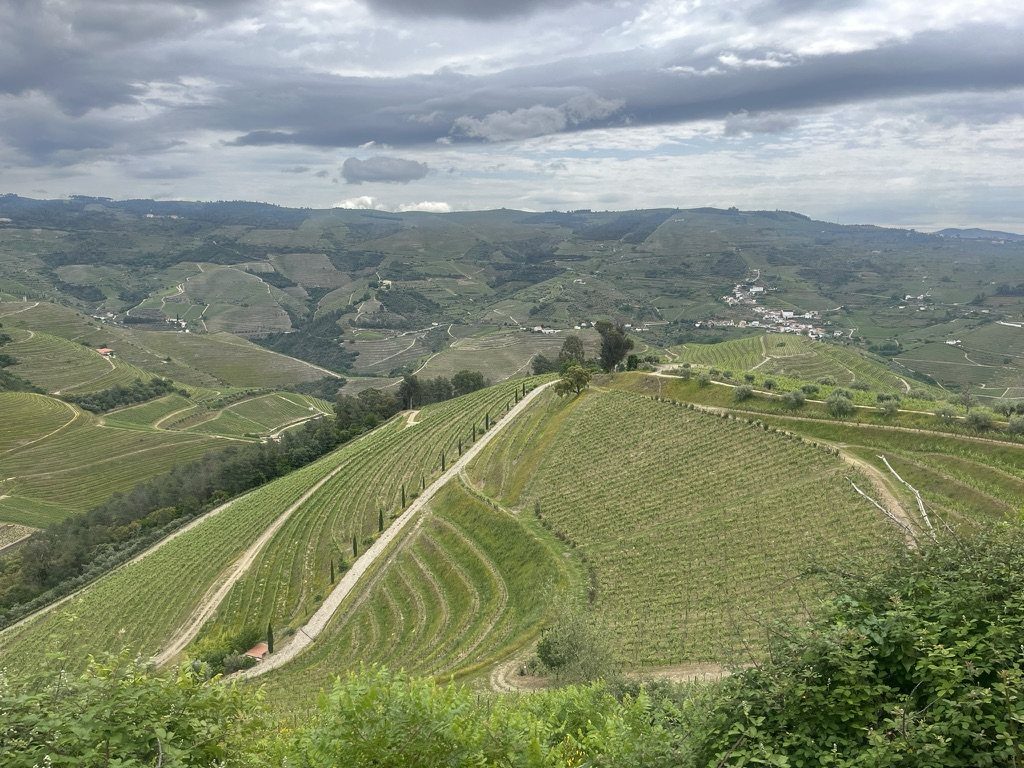
Schist in the Douro
The Douro is a strip of ancient schist, enclosed by granite. That schist splits into almost vertical plates. For a vine that's ideal: the roots push deep into the ground between the plates, and rainwater seeps down with them. As a result, the vines survive the hot, dry summers without irrigation. It's also why in the Douro the vineyards on schist perform better than those on the hard granite next door.
The result: small harvests and concentrated, powerful wines, both port and dry Douro. Taste it at Wine & Soul, Poeira or Luis Seabra, who doesn't call his Douro wines Xisto by accident.
Granite in the Dão and Vinho Verde
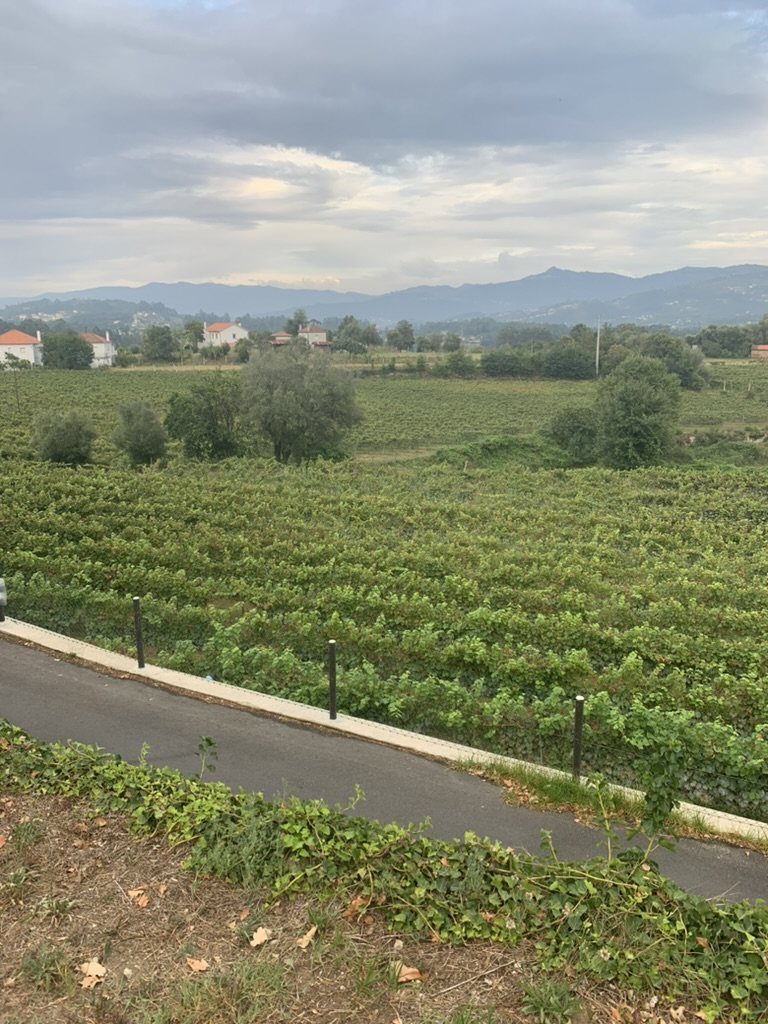
Granite weathers into an acidic, poor and sandy soil that drains well. In the Dão this granite lies on a plateau between mountains, a few hundred metres up, with cool nights. In Vinho Verde, Atlantic rain is added to the mix. The wines there are generally leaner and fresher than in the Douro, with more tension than power.
Think of the red and white Dão from Alvaro Castro and António Madeira, or the Alvarinho from Soalheiro. Luis Seabra even makes the difference visible on his labels: alongside his Xisto wines from the Douro are Granito Cru wines from granite, from the Dão and Vinho Verde.
Clay and limestone in Bairrada and Lisboa
On the west coast the subsoil is completely different: limestone and marl, often mixed with clay. In Bairrada this mixture is called argilo-calcário. Clay holds on to water, while limestone keeps the soil airy and well drained. For Baga, a grape with firm tannins and high acidity, the warmer, well-drained clay-limestone plots are the best sites.
You can taste it in the wines of Filipa Pato en William Wouters and of Quinta das Bágeiras. You'll also find limestone in Lisboa: at Quinta da Murta in Bucelas and at Humus. These wines often have a taut acidity and a fresh length.
Sand in Colares
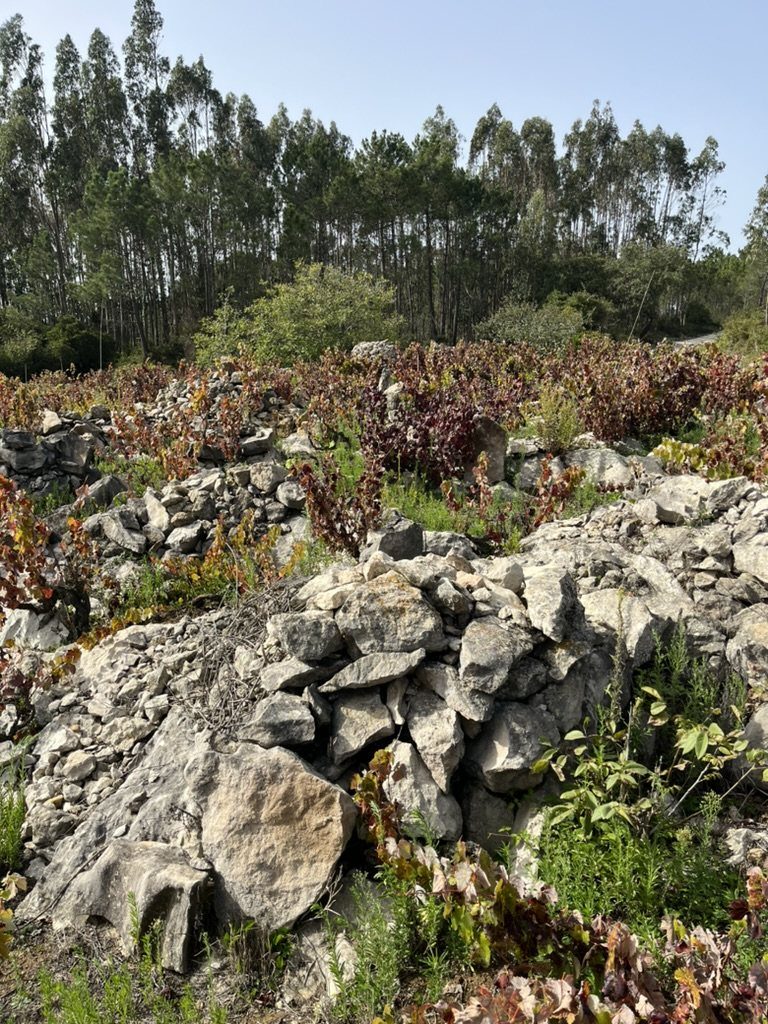
The most remarkable example lies on the coast near Sintra. In Colares the vines grow in dune sand, with their roots in the clay beneath. That sand saved the vineyards from phylloxera in the nineteenth century, because the louse can't survive in it. As a result, there are still ungrafted vines of Ramisco and Malvasia de Colares. The white wine is distinctly salty, the red austere and sober. A tiny region, but a wonderful example of how a soil can save a vineyard.
Lava in the Azores and Madeira
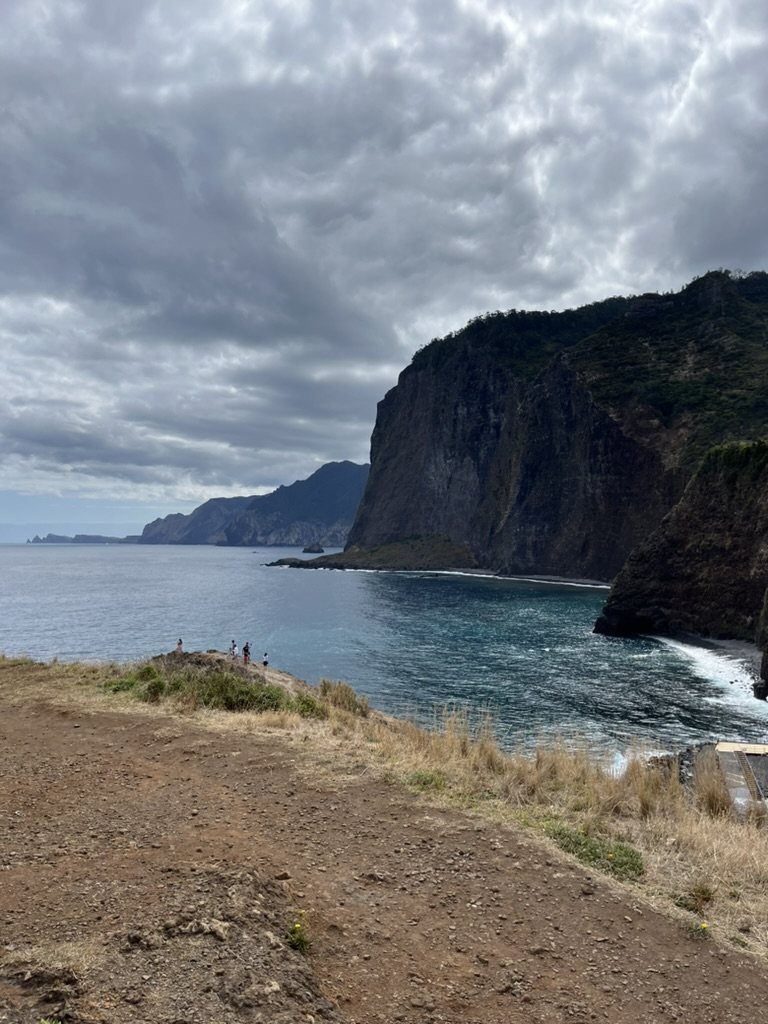
On the island of Pico, the vines grow in cracks in black basalt lava, filled with soil, behind little walls of lava stone that protect them from wind and seawater. Hardly any other crop would grow there. The wines are salty and long. On Madeira the vineyards are on steep slopes of weathered basalt, on small terraces above the ocean. There too, the interplay of soil, slope and sea is what gives the wine its character.
Why I still like to talk about it
If the soil isn't directly in your glass, why talk about it? Because it helps explain why two winemakers with the same grape, half an hour's drive apart, make such different wines. A Touriga Nacional from the granite of the Dão is a different wine from one grown on the schist of the Douro. Not because you taste the granite, but because the vine grows differently there, ripens differently and responds differently to a dry summer.
And because it shows why old, poor vineyards are so valuable: vines that have had their roots deep in schist or granite for decades need no irrigation and give few, but good, grapes every year. That's exactly the kind of vineyard many of my winemakers work with.
Want to see what soil your favourite winemaker works on? On the Wine Atlas , switch on the "Soil" layer and click on a winemaker. You can read more about the grapes themselves on our page about Portuguese grape varieties.
Sources
- The Oxford Companion to Wine, via JancisRobinson.com: soil and wine quality, minerality, schist, granite, limestone, Douro, Bairrada, Colares, Pico.
- Soil map: LNEG, Carta Geológica de Portugal 1:1 000 000.